How can every executive be meeting their objectives while the...
Read More
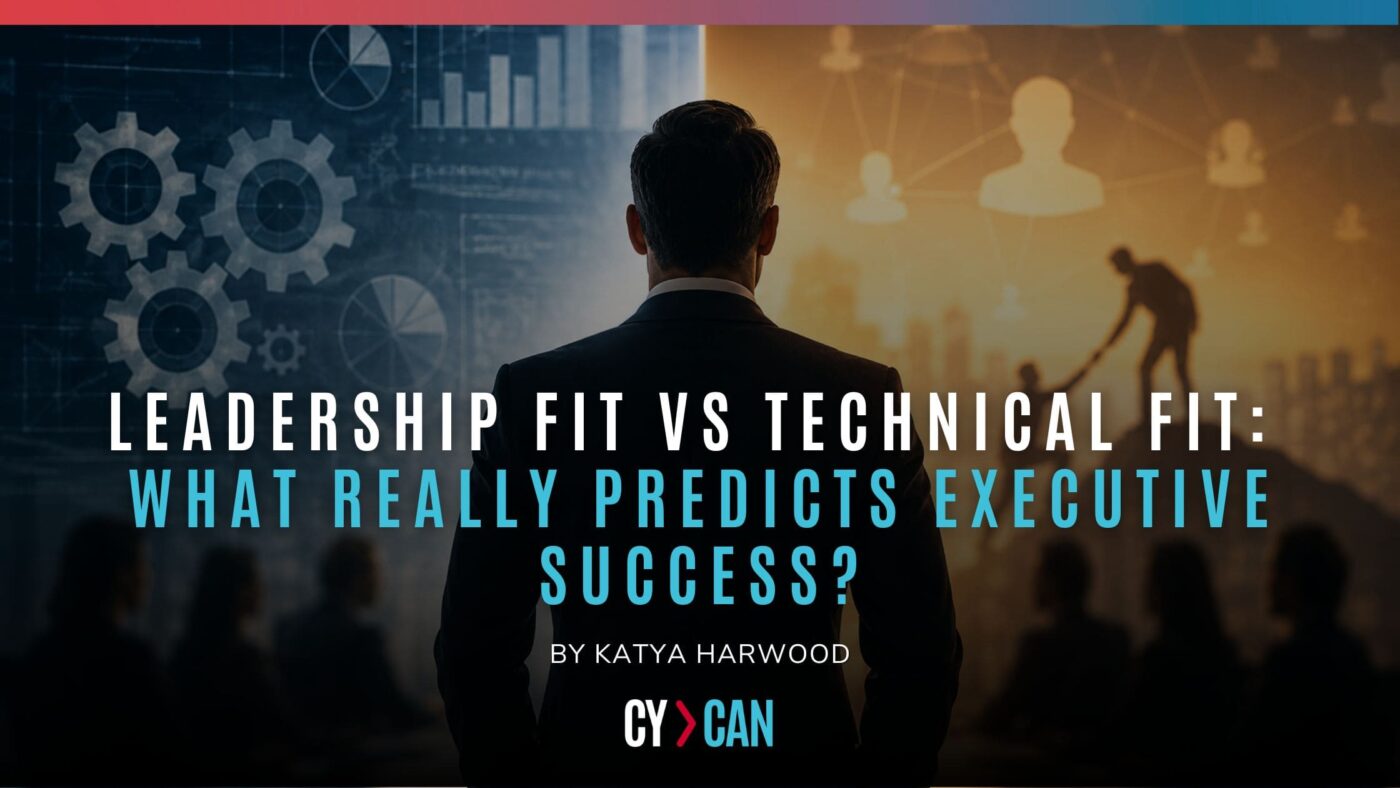
If every executive on your shortlist has the qualifications, experience, and technical expertise to perform the role, what actually determines who will succeed?
For decades, executive hiring has been driven by credentials.
Boards review impressive CVs.
Organisations compare years of experience.
Search committees evaluate industry knowledge, functional expertise, academic qualifications, and previous achievements.
These factors are undoubtedly important.
An executive must possess the technical capability to lead a business, understand its commercial realities, and execute its strategic priorities.
Yet when organisations reflect on executive appointments that ultimately failed, technical competence is rarely the primary reason.
More often, the appointment breaks down because of something less tangible.
The leader struggles to build trust.
They fail to align the executive team.
They cannot influence stakeholders.
They create unnecessary conflict.
They misread the organisational culture.
They lack the agility to adapt.
Or they simply never earn the confidence of the people they were appointed to lead.
The reality is that executive success depends on far more than technical capability.
It depends on leadership fit.
At Cycan, we believe this is one of the most important distinctions organisations can make when appointing senior leaders. Executive search should never be about identifying the most experienced candidate. It should be about identifying the leader who is best positioned to help the organisation achieve its future ambitions.
By the time someone reaches executive level, technical capability should no longer be the differentiator.
It should be the expectation.
Most candidates shortlisted for CEO, CFO, COO, CHRO, or Executive Director positions have already demonstrated their ability to perform at a high level. They have managed significant budgets, led complex teams, delivered strategic initiatives, and accumulated years of industry experience.
If everyone on the shortlist is technically capable, then technical capability alone cannot explain who will succeed.
The real differentiator lies elsewhere.
It lies in how they lead.
These questions move the conversation beyond competence and into leadership.
One of the greatest misconceptions in executive hiring is that leadership naturally follows appointments.
It doesn’t.
An executive receives authority when they are appointed.
They earn leadership over time.
Leadership cannot be delegated through an employment contract or organisational chart.
It is built through credibility.
Consistency.
Integrity.
Curiosity.
Humility.
Trust.
The most successful executives understand that people rarely follow titles.
They follow leaders who create clarity during uncertainty, remain calm under pressure, communicate honestly, and genuinely care about the people they lead.
Research from Korn Ferry consistently identifies self-awareness, emotional intelligence, learning agility, collaboration, and adaptability as some of the strongest predictors of executive effectiveness.
These qualities rarely appear prominently on a CV.
Yet they often determine whether an executive succeeds or fails.
When organisations analyse failed executive appointments, they often discover a surprising pattern.
The executive was technically outstanding.
They understood the industry.
They had impressive credentials.
Their previous achievements were unquestionable.
Yet they still failed.
Why?
Because leadership exists inside a system.
Every organisation has its own culture.
Its own decision-making rhythms.
Its own history.
Its own values.
Its own unwritten rules.
An executive who excelled in one environment may struggle in another, not because they became less capable overnight, but because their leadership style no longer aligns with the context in which they now operate.
Research published by Russell Reynolds Associates continues to demonstrate that executive derailment is far more closely linked to behavioural and leadership challenges than technical shortcomings.
The lesson is clear.
Experience matters.
Leadership fit matters more.
Leadership fit should never be confused with hiring people who simply “fit in.”
Healthy organisations benefit from diversity of thought, constructive challenge, and different perspectives.
Leadership fit is something much deeper.
It asks whether a leader can help the organisation achieve its strategic intent.
Can they strengthen the existing executive team?
Can they elevate organisational capability?
Can they lead the next stage of growth?
Can they challenge respectfully while building trust?
Can they create alignment without creating conformity?
At Cycan, we believe leadership fit sits at the intersection of several important dimensions.
Purpose.
Values.
Leadership philosophy.
Strategic capability.
Learning agility.
Relational intelligence.
Cultural contribution.
Future potential.
These dimensions cannot be assessed by reviewing a CV alone.
They require thoughtful conversation, careful observation, executive assessment, and an understanding of both the organisation and the individual.
Executive leadership has become increasingly complex.
Leaders are expected to navigate hybrid workforces, geopolitical uncertainty, economic volatility, digital transformation, generational diversity, and constant organisational change.
Technical expertise alone cannot meet these challenges.
Emotional intelligence has become one of the defining leadership capabilities of modern executives.
Research by Daniel Goleman and subsequent leadership studies have consistently demonstrated that emotional intelligence contributes significantly to executive effectiveness, particularly in areas such as self-awareness, empathy, relationship management, resilience, and decision-making under pressure.
Executives with high emotional intelligence tend to create psychologically safer environments, build stronger executive teams, resolve conflict more constructively, and inspire greater engagement across organisations.
These capabilities create long-term organisational value that extends far beyond operational performance.
One of the challenges facing boards today is that organisations are changing faster than experience alone can keep pace with.
The executive who solved yesterday’s challenges may not automatically solve tomorrow’s.
This makes learning agility one of the most valuable executive capabilities.
Learning agility is the ability to adapt, remain curious, acquire new knowledge, challenge assumptions, and respond effectively to unfamiliar situations.
It allows leaders to evolve alongside their organisations.
Rather than relying solely on previous experience, agile leaders continuously expand their thinking.
They ask better questions.
They invite different perspectives.
They remain intellectually humble.
Research from Korn Ferry suggests that learning agility is one of the strongest indicators of long-term executive potential because it predicts a leader’s ability to succeed in increasingly complex environments.
This is particularly important when organisations are experiencing rapid growth, transformation, acquisitions, or strategic change.
One of Bryan Hattingh’s strongest observations is that organisations often hire executives because of their legacy skills rather than their future contribution.
An executive may have achieved extraordinary success elsewhere.
That does not automatically mean they are the right leader for your organisation.
The more important question is not:
“What have they done?”
It is:
“What will they enable us to become?”
This subtle shift changes the entire executive search process.
Rather than evaluating only historical performance, organisations begin assessing future capacity.
Can this leader grow with the business?
Can they lead the next phase?
Can they increase organisational capability?
Can they build future leaders?
Can they leave the organisation stronger than they found it?
Those are leadership questions.
Not recruitment questions.
Executive success is never achieved in isolation.
Even exceptional leaders depend upon healthy executive team dynamics.
The strongest appointments therefore consider not only the individual but also the system they are entering.
How will this executive complement the existing team?
What perspectives will they bring?
Where might tensions emerge?
How can diversity of thought become an advantage rather than a source of conflict?
How will they influence collective leadership?
This systems perspective is often overlooked in traditional hiring processes.
Yet it is central to executive search.
An outstanding individual who weakens the executive team’s effectiveness ultimately weakens the organisation.
A strong appointment strengthens both.
Executive hiring should never become an exercise in comparing résumés.
The most impressive CV is not always the strongest executive appointment.
The best leader may have a less prestigious title.
A different industry background.
A non-traditional career path.
What matters is whether they possess the leadership capability required to create future organisational success.
This requires organisations to look beyond experience and ask deeper questions.
How do they lead?
How do they learn?
How do they influence?
How do they respond to uncertainty?
How do they develop others?
How do they build trust?
Those answers reveal far more than a list of previous achievements ever could.
Technical capability may secure an executive interview.
Leadership fit determines whether that executive creates lasting organisational impact.
At Cycan, our executive search philosophy goes beyond qualifications and experience. We partner with boards, CEOs, founders, and executive teams to identify leaders who align with organisational strategy, strengthen executive teams, and contribute to sustainable organisational growth.
We believe executive appointments should never be based solely on what someone has achieved.
They should be based on what they will help your organisation achieve next.
Because leadership is ultimately about creating the future, not simply repeating the past.
If every executive on your shortlist is technically capable, isn’t the real question whether you’ve identified the leader who will help shape your organisation’s future?
If you’re looking to appoint leaders who will truly elevate your organisation, we invite you to contact Cycan. Our team is ready to partner with you to identify and secure executives who align with your strategy and drive lasting impact.
How can every executive be meeting their objectives while the...
Read MoreWhat does it cost your organisation when the person who...
Read MoreIf an AI can ask sharp questions, test your assumptions...
Read MoreWhat if the behaviours holding your organisation back are not...
Read MoreWe use cookies to enhance your browsing experience, serve personalised ads or content,
and analyse our traffic. By clicking "Accept All", you consent to our use of cookies.