When was the last time your executive team had a...
Read More
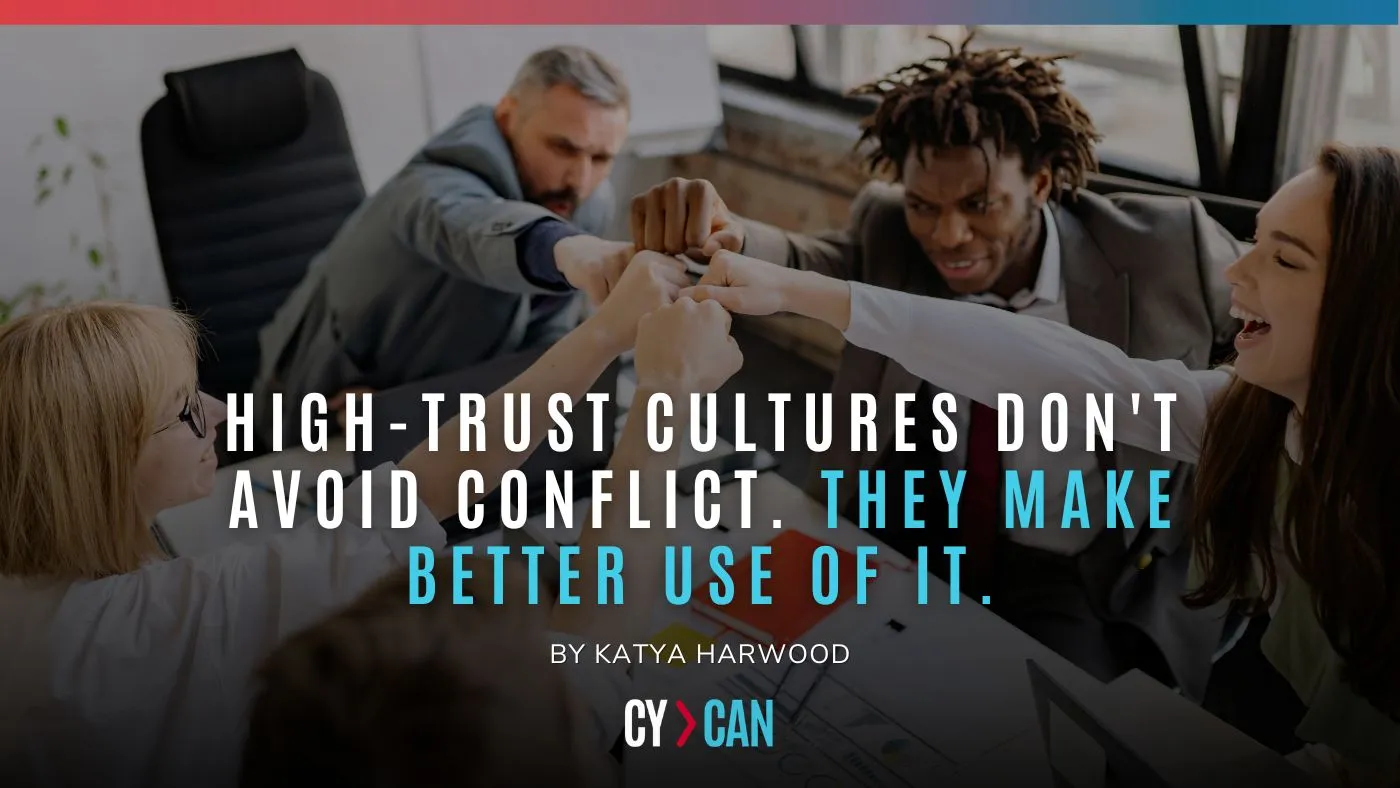
When was the last time your executive team had a disagreement that genuinely made a decision better?
For many organisations, that question creates an uncomfortable silence.
Not because conflict never happens.
But because conflict has quietly become something to avoid.
In boardrooms across the world, leadership teams celebrate alignment. They pride themselves on moving quickly, reaching consensus and presenting a united front. Meetings finish on time. Decisions appear unanimous. Conversations remain professional. From the outside, everything looks healthy.
Yet appearances can be deceptive.
Some of the most dysfunctional leadership teams are remarkably polite.
They rarely interrupt one another.
They seldom challenge ideas.
Disagreements are softened, delayed or moved into private conversations after the meeting has ended.
The atmosphere feels calm.
The organisation pays the price.
This is one of the greatest misconceptions in leadership.
Conflict is not the enemy of trust.
Avoided conflict is.
High-trust cultures understand something many organisations never fully appreciate. Trust does not eliminate disagreement. It creates the confidence to disagree honestly, respectfully and productively. It transforms conflict from something leaders fear into something that improves thinking.
That distinction matters because organisations rarely fail through a lack of intelligence.
They fail because intelligent people stop challenging one another.
For decades, leadership development has unintentionally reinforced the idea that good leaders keep the peace.
We celebrate harmony.
We admire consensus.
We praise leaders who can “get everyone on the same page.”
While collaboration matters, harmony is not always healthy.
In fact, one of the most dangerous moments for any executive team is when everyone appears to agree too quickly.
Agreement can mean alignment.
It can also mean caution.
People often mistake silence for support.
They assume the absence of conflict means the presence of trust.
In reality, the opposite is often true.
When people no longer believe their disagreement will be welcomed, they simply stop offering it.
The meeting ends.
The conversations continue afterwards.
Decisions are questioned privately rather than strengthened publicly.
That is not trust.
That is organisational self-protection.
The strongest cultures are not those where everyone thinks alike.
They are those where people think differently without fearing one another.
Patrick Lencioni’s work in The Five Dysfunctions of a Team fundamentally changed how organisations think about leadership teams.
He argues that trust is not the end goal.
It is the foundation.
When trust exists, teams engage in healthy conflict.
When trust is absent, conflict becomes either destructive or disappears altogether.
Neither outcome produces exceptional decisions.
Healthy conflict is disciplined.
It focuses on ideas rather than personalities.
It seeks understanding before persuasion.
It assumes positive intent.
Most importantly, it recognises that robust debate strengthens commitment because people know they have genuinely been heard.
This is where many organisations struggle.
They attempt to improve collaboration before building trust.
They encourage alignment before creating psychological permission to disagree.
They ask leaders to move faster without ensuring decisions have been sufficiently challenged.
The result is often an expensive consensus.
Not better thinking.
Financial debt accumulates gradually.
So does conversational debt.
Every time a difficult conversation is postponed, avoided or softened beyond recognition, the organisation incurs another small liability.
One unresolved disagreement becomes two.
One assumption remains untested.
One concern goes unspoken.
One decision proceeds without enough challenge.
None of these moments seem significant in isolation.
Collectively, they reshape the organisation.
Over time, leaders become increasingly reluctant to address underperformance directly.
Strategic risks remain unchallenged.
Relationships become polite rather than honest.
Feedback becomes infrequent.
Meetings become updates instead of discussions.
Eventually the organisation loses one of its greatest competitive advantages.
Its ability to think critically together.
Conflict is expensive.
Avoided conflict is even more expensive.
Because the cost is rarely paid immediately.
It compounds quietly through slower learning, weaker decisions and missed opportunities.
High-performing executive teams are often misunderstood.
People assume they experience less tension because they trust one another more.
The reality is almost the opposite.
They often experience more disagreement.
The difference lies in how they handle it.
They challenge assumptions without questioning character.
They debate ideas vigorously without damaging relationships.
They remain committed to solving the problem rather than winning the argument.
Most importantly, they understand that disagreement before commitment creates stronger commitment afterwards.
Research from the Center for Creative Leadership consistently shows that organisations benefit when leaders develop the capability to engage in constructive conflict. Teams that avoid difficult conversations often experience lower levels of innovation, reduced collaboration and poorer organisational outcomes because important issues remain unresolved.
Constructive conflict is therefore not an interruption to leadership.
It is one of leadership’s primary responsibilities.
The reluctance to challenge one another rarely begins with fear.
It begins with success.
As leadership teams spend more time together, relationships deepen.
Executives begin understanding one another’s preferences, personalities and communication styles.
That familiarity creates trust.
Ironically, it can also create caution.
Nobody wants to damage an important working relationship.
Nobody wants to appear unnecessarily difficult.
Nobody wants to create tension before a major board meeting or strategic decision.
Gradually, difficult conversations become carefully managed.
Language becomes softer.
Questions become less direct.
Feedback becomes increasingly diplomatic.
The intention is positive.
The outcome often is not.
Leadership teams begin protecting relationships instead of protecting decisions.
Yet exceptional relationships are not built by avoiding honest conversations.
They are strengthened by them.
One of the defining characteristics of high-trust cultures is psychological maturity.
Psychological maturity allows leaders to separate disagreement from personal rejection.
It allows them to hear criticism without immediately becoming defensive.
It enables them to change their minds without feeling that their authority has been weakened.
This requires discipline.
It also requires humility.
The most effective executive teams understand that challenging an idea is an act of stewardship.
It demonstrates commitment to the organisation rather than opposition to the individual presenting it.
This is where many leadership teams experience a profound shift.
They stop asking,
“Who disagrees?”
Instead they ask,
“What perspective haven’t we considered?”
That single question changes the quality of every strategic conversation.
There is a common thread running through many of the world’s most resilient organisations.
They have institutionalised constructive challenges.
They deliberately create opportunities for assumptions to be tested.
They expect respectful disagreement.
They reward thoughtful questions.
They normalise intellectual humility.
Research published by the Chartered Institute of Personnel and Development (CIPD) suggests that well-managed conflict contributes to healthier workplace relationships, stronger collaboration and more sustainable organisational performance. The issue is not whether conflict exists. Every organisation experiences it. The issue is whether leaders have the capability to engage with it constructively.
High-trust cultures therefore do not pursue harmony at any cost.
They pursue better decisions.
Sometimes those decisions emerge through agreement.
Often they emerge through disagreement that has been handled well.
Perhaps we have misunderstood conflict because we have focused on the emotion rather than the outcome.
Conflict is uncomfortable.
So is growth.
So is transformation.
So is innovation.
Every meaningful organisational breakthrough requires leaders willing to challenge existing assumptions.
Without challenge there is no learning.
Without learning there is no adaptation.
Without adaptation there is no sustainable success.
The goal is never conflict for its own sake.
The goal is stronger thinking.
Better questions.
More informed decisions.
Healthier relationships.
Greater organisational trust.
Conflict is simply one of the pathways that makes those outcomes possible.
Leadership teams often ask how they can build greater trust.
The better question may be this.
Have we created an environment where people can disagree honestly without fearing the consequences?
Because trust is not measured by how peaceful meetings appear.
It is measured by whether the most important conversations are actually taking place.
The strongest organisations are not those where conflict is absent.
They are the organisations where conflict becomes a catalyst for wisdom rather than a source of division.
High-trust cultures do not avoid conflict.
They make better use of it.
If your leadership team stopped protecting harmony and started protecting better decisions, what might become possible?
At Cycan, we believe exceptional leadership is not built through agreement alone. It is built through courageous conversations, healthy challenges and the trust required to engage in them. We partner with CEOs, Boards and executive teams to strengthen executive alignment, leadership effectiveness and organisational culture through executive coaching, leadership transformation and high-trust culture development.
When leadership teams learn to disagree well, they do more than improve relationships. They improve the quality of every decision the organisation makes.
If your executive team is ready to transform conflict from a source of tension into a strategic advantage, we’d welcome the opportunity to start that conversation.
When was the last time your executive team had a...
Read MoreWhat does it really cost an organisation when its leaders...
Read MoreWhy do organisations that once inspired innovation, courage and exceptional...
Read MoreWhat if your next executive appointment influences far more than...
Read MoreWe use cookies to enhance your browsing experience, serve personalised ads or content,
and analyse our traffic. By clicking "Accept All", you consent to our use of cookies.