How can every executive be meeting their objectives while the...
Read More
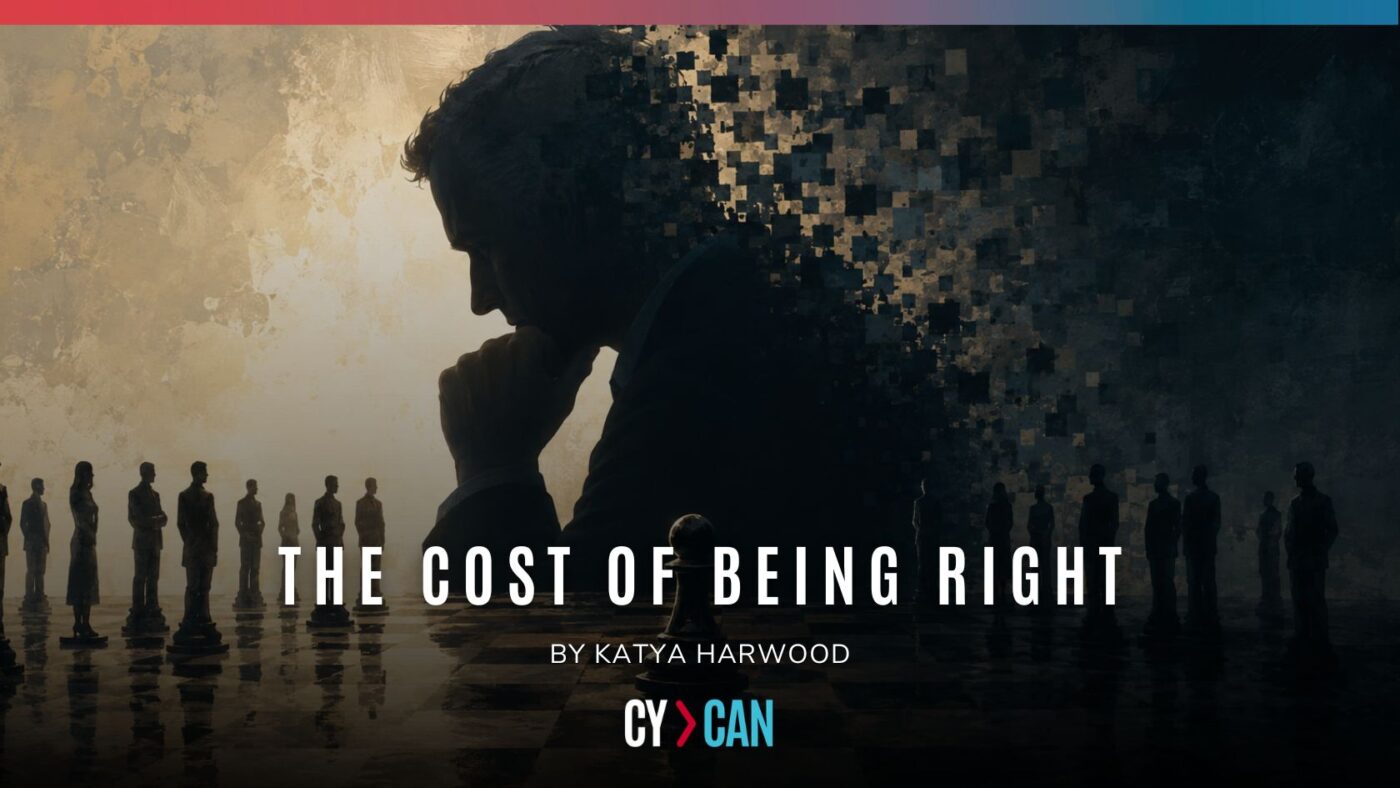
What does it really cost an organisation when its leaders always have the right answers?
Leadership has never been about having all the answers.
Yet somewhere along the way, many organisations began rewarding leaders as though it were.
Executives are appointed because of their experience. Boards place their confidence in leaders who have navigated complexity, made difficult decisions and delivered results. Shareholders expect confidence. Employees look for certainty during times of change. The pressure to appear decisive has never been greater.
There is nothing wrong with confidence. The problem begins when confidence quietly transforms into certainty.
Certainty is attractive because it creates the appearance of strong leadership. It communicates conviction, direction and control. It reassures people that someone knows what to do. In the short term, certainty often feels efficient because it reduces debate, accelerates decisions and creates the illusion of alignment.
But leadership is rarely damaged by a lack of answers.
It is damaged when leaders become so attached to being right that they stop creating space for better answers to emerge.
This is the hidden cost of certainty. It is not measured on financial statements. It does not appear in quarterly reports. It rarely features in board papers.
Yet it influences almost every aspect of organisational performance. It determines whether talented people speak honestly or remain silent. It shapes the quality of executive decision-making. It influences innovation, transformation and succession.
Most importantly, it determines whether an organisation continues learning or quietly begins repeating itself. The organisations that outperform over decades are not those led by people who always have the right answers.
They are led by people who remain curious long after success has given them every reason not to be.
One of the greatest misconceptions about leadership is that experience should eliminate uncertainty.
In reality, experience should improve judgement while increasing humility.
The more complex the environment becomes, the less likely it is that any one individual possesses all the information required to make the best decision.
Today’s organisations operate in a world defined by technological disruption, geopolitical uncertainty, changing workforce expectations and rapidly evolving customer behaviour. The leadership challenges facing organisations today are adaptive rather than technical. They cannot be solved simply by applying yesterday’s expertise to tomorrow’s problems.
This distinction sits at the heart of Ronald Heifetz’s work on Adaptive Leadership. Heifetz argues that technical problems have known solutions. Adaptive challenges do not. They require organisations to learn, experiment, question assumptions and involve people across the system in finding answers rather than relying on a single expert to provide them.
That insight should fundamentally change how executives think about their role. Leadership is not about demonstrating superior knowledge. It is about creating an environment where collective intelligence can flourish.
The most effective executive in the room is not necessarily the person with the strongest opinion. It is often the person who asks the question no one else has considered.
Edgar Schein, one of the world’s foremost organisational psychologists, spent decades studying the relationship between leadership and organisational culture. In Humble Inquiry, he argues that genuine curiosity is not a soft leadership skill but a strategic capability. Leaders who ask sincere questions rather than immediately offering solutions create stronger relationships, uncover better information and build organisations that learn faster.
That idea challenges one of the oldest assumptions in leadership.
Many executives believe their credibility depends on demonstrating expertise. In reality, credibility grows when leaders demonstrate that they are willing to learn. There is a profound difference between confidence and certainty.
Confidence says:
“I have experience that may help us.”
Certainty says:
“There is nothing here I need to learn.”
One invites a contribution.
The other quietly closes the conversation.
Most leaders never intend to silence the people around them. Yet every time a leader answers before listening, interrupts before understanding or defends a position before exploring alternatives, they send a message to the organisation.
The message is rarely spoken aloud. It doesn’t need to be. People begin to understand which ideas are welcome, which questions are inconvenient and which conversations are safest left unspoken.
That is where the cost begins. Not because people stop thinking. Because they stop believing their thinking matters. And once that happens, the organisation starts paying a price that compounds over time. Every time a leader chooses being right over being curious, the organisation pays a price.
One of the earliest and most expensive consequences of always needing to be right is not disagreement. It is silence.
Silence is deceptive because it often looks like alignment.
Meetings become smoother. Decisions receive less resistance. Presentations attract fewer questions. Executive discussions become increasingly efficient because everyone appears to agree.
Many leaders interpret this as progress. It is often the opposite.
People do not stop challenging leaders because they suddenly agree with every decision being made. They stop because they begin calculating the personal cost of speaking honestly.
These questions are rarely spoken aloud. They become internal conversations that slowly reshape organisational behaviour. This is why the absence of disagreement should never be mistaken for the presence of trust.
In healthy organisations, difficult conversations happen early. In unhealthy organisations, they happen privately after the meeting has ended.
Leaders often believe they have created alignment because everyone nodded in agreement. In reality, they may simply have created compliance.
Edgar Schein argued that genuine inquiry requires leaders to temporarily suspend their own assumptions long enough to understand someone else’s perspective. That sounds simple, yet it is remarkably difficult for experienced executives whose expertise has been rewarded throughout their careers.
When leaders genuinely inquire, people feel heard. When leaders simply wait for an opportunity to reinforce their own opinion, people notice. Eventually they stop volunteering information altogether.
The greatest organisational risks are rarely hidden because employees fail to recognise them. They remain hidden because employees no longer believe leadership wants to hear them.
History is filled with examples where warning signs existed long before organisational crises emerged. The information was available. The environment simply wasn’t conducive to speaking openly.
Leaders often ask,
“Why didn’t anyone tell me?”
The more important question is,
“What have I done that made people believe they couldn’t?”
That question requires humility. It also requires courage.
One of the greatest myths in leadership is that decisive leaders automatically make better decisions.
Decisiveness matters. But decisive leadership without robust thinking often produces confident mistakes rather than better outcomes.
High-quality decisions rarely emerge from one brilliant mind.
They emerge from rigorous thinking, constructive challenge and diverse perspectives.
McKinsey’s research into organisational decision-making has repeatedly found that organisations making high-quality decisions consistently outperform their peers because they encourage robust debate, involve the right people and separate the quality of ideas from organisational hierarchy.
The implication is significant. Poor decisions are not always the result of poor leaders.
They are often the result of leadership environments where disagreement has become increasingly uncomfortable. Once leaders become emotionally invested in proving they are right, every opposing opinion begins to feel like resistance rather than contribution.
The discussion changes.
Instead of asking,
“What is the strongest argument against this?”
the conversation quietly becomes,
“How do we convince everyone this is the right approach?”
Those are fundamentally different questions. The first improves thinking. The second protects certainty.
Organisations that consistently outperform understand this distinction. They challenge ideas aggressively while respecting people completely. They create processes that expose assumptions rather than defend them.
They understand that disagreement before a decision dramatically reduces regret afterwards.
Innovation is often associated with creativity. In reality, innovation begins with curiosity.
Curiosity asks questions. Curiosity experiments. Curiosity accepts that today’s solution may not be tomorrow’s.
When leaders always need to be right, curiosity quietly disappears. Why suggest a different approach if the outcome already feels predetermined? Why challenge an existing process if leadership consistently defends the status quo? Why experiment if failure is interpreted as poor judgement rather than valuable learning?
Innovation rarely dies because organisations run out of intelligent people. It declines because intelligent people stop believing that different thinking is genuinely welcome.
Harvard Business Review has published extensively on leadership humility, demonstrating that leaders who remain open to new ideas create environments that are more adaptable, collaborative and innovative than those led through certainty alone.
The lesson is straightforward.
Innovation is not sustained by inspirational speeches encouraging people to think differently. It is sustained by leaders who consistently demonstrate that different thinking will be heard, explored and respected.
People watch behaviour far more closely than they listen to slogans.
This is perhaps the most dangerous cost because it often affects the most senior people in the organisation. Executive teams begin performing leadership instead of practising leadership.
The conversations sound productive. Everyone contributes. Updates are shared. Strategies are discussed.
Yet beneath the surface something important has changed. People begin reading the room before offering an opinion. Ideas are presented only after they have been carefully filtered. Questions become increasingly cautious.
Executives learn which viewpoints receive encouragement and which receive subtle resistance. Over time the meeting stops being a place where strategy is shaped. It becomes a place where existing thinking is confirmed.
The irony is striking.
The people with the greatest responsibility for protecting the future of the organisation slowly become less willing to challenge one another.
That is not alignment. It is organisational theatre.
Healthy executive teams understand that disagreement is not disloyalty. It is stewardship.
The responsibility of an executive team is not to make the Chief Executive comfortable. Its responsibility is to ensure the organisation makes the best possible decisions. Those are not always the same thing.
Leadership teams that forget this begin protecting one another’s certainty instead of protecting the organisation’s future. And organisations always pay the price.
Few organisations fail because they lack strategy.
Many fail because they cannot let go of the thinking that made them successful in the first place.
Transformation is not simply the implementation of a new system, a revised operating model or a refreshed strategy. At its heart, transformation is about helping people see differently, think differently and behave differently. It requires organisations to challenge assumptions that have often been rewarded for years.
That is precisely why certainty becomes such a significant obstacle.
When leaders become emotionally attached to being right, they also become emotionally attached to protecting the past. Existing processes feel safer than experimentation. Familiar approaches feel more reliable than uncertainty. Proven methods appear less risky than exploring new possibilities.
The result is not resistance to change in the traditional sense. It is resistance to learning.
Ronald Heifetz reminds us that adaptive challenges cannot be solved through expertise alone. They require organisations to confront uncomfortable realities, question long-held assumptions and involve people in creating solutions rather than simply implementing instructions.
Transformation therefore demands a leadership mindset that is comfortable saying,
“What brought us here may not be enough to take us where we need to go.”
That statement is not an admission of failure.
It is an acknowledgement that growth requires continual adaptation.
Some of the most significant business transformations of the last two decades have not been driven by organisations that possessed all the answers. They were led by organisations willing to ask better questions.
Microsoft’s cultural renewal under Satya Nadella was built around replacing certainty with learning. Adobe fundamentally changed its performance management philosophy by abandoning annual performance reviews in favour of continuous conversations. Netflix continually reinvented its business model rather than defending the one that had already made it successful.
These organisations were not transformed because they found perfect strategies. They transformed because their leaders remained willing to rethink old assumptions.
Transformation slows the moment leaders become more committed to defending previous decisions than discovering better ones.
One of the greatest ironies in organisational life is that the more senior leaders become, the less honest feedback they often receive.
It is not because senior leaders no longer need feedback. It is because fewer people are willing to give it.
Hierarchy changes conversations.
People naturally become more cautious around authority. They soften difficult messages, avoid uncomfortable topics and often tell senior leaders what they think they want to hear rather than what they genuinely need to hear.
Leaders who always need to be right unintentionally reinforce this dynamic. Over time, they become surrounded by agreement rather than insight.
The danger is obvious.
The people with the greatest responsibility for shaping organisational direction become the people receiving the least accurate picture of reality. This is one of the reasons executive coaching has become such an important investment for high-performing organisations.
Exceptional coaching does not exist because executives lack intelligence.
It exists because every leader needs a space where assumptions can be challenged, thinking can be tested and blind spots can be explored without judgement.
The strongest leaders never outgrow learning. They simply become more intentional about it. The moment leaders believe they have nothing left to learn is often the moment their growth quietly begins to plateau.
We often describe trust as though it were something people either have or they do not.
The reality is more nuanced. Trust grows through repeated experiences.
Every conversation either strengthens it or weakens it. Every meeting either encourages honesty or discourages it. Every leadership behaviour communicates what is genuinely valued inside the organisation.
When leaders consistently demonstrate curiosity, people become more willing to contribute. When leaders consistently demonstrate certainty, people become increasingly selective about what they share.
Eventually trust becomes conditional.
Employees begin asking themselves, “Is this one of those conversations where honesty is actually welcome?”
The fact that they need to ask the question at all should concern every executive.
Organisational trust is not built when leaders have all the answers. It is built when people believe their perspective can genuinely influence the outcome.
Listening therefore becomes one of the most strategic leadership capabilities available. Not listening in order to respond. Listening in order to understand.
There is a profound difference.
One protects the leader.
The other strengthens the organisation.
There is a misconception that curiosity makes leaders appear uncertain.
In reality, curiosity demonstrates confidence.
Only secure leaders are comfortable admitting they do not know everything. Only secure leaders are willing to invite challenge without perceiving it as a threat. Only secure leaders recognise that the quality of their leadership is reflected in the quality of the conversations taking place around them.
Curiosity is not passive.
It is disciplined. It asks difficult questions. It explores opposing viewpoints. It seeks evidence rather than affirmation. It values understanding over ego.
The leaders who create extraordinary organisations are rarely those who dominate every conversation. They are the leaders who make everyone else think more deeply.
That is a very different form of influence.
It is quieter. It is less visible. It is also considerably more powerful.
Every leader wants to make good decisions. Every executive wants to create confidence. Every organisation wants leaders who inspire trust.
Yet confidence and certainty are not the same thing. One creates clarity. The other can unintentionally close the door to learning.
The real cost of always being right is not paid in damaged reputations or bruised egos. It is paid through conversations that never happen.
Ideas that are never shared. Risks that remain hidden. Innovation that never materialises. Transformation that loses momentum.
And people who quietly decide that speaking honestly is no longer worth the effort. Leadership has never been about proving your intelligence.
It has always been about creating an environment where the collective intelligence of the organisation can flourish.
The strongest leaders understand a simple but profound truth. Every time they choose curiosity over certainty, they make their organisation stronger. Every time they choose being right over learning, the organisation pays a price.
When was the last time your leadership team asked a question that genuinely changed the way it thought?
At Cycan, we believe sustainable leadership is not measured by how often leaders have the right answers, but by their ability to create environments where the best answers emerge. We partner with CEOs, Boards and executive teams to strengthen leadership effectiveness through executive coaching, executive team alignment, leadership transformation and high-trust culture development.
The organisations that thrive in an increasingly complex world will not be those with the most experienced leaders.
They will be those with leaders who never stop learning.
If you’re ready to build a leadership team that listens more deeply, thinks more critically and leads with the humility required to navigate an uncertain future, we’d welcome the opportunity to start that conversation.
How can every executive be meeting their objectives while the...
Read MoreWhat does it cost your organisation when the person who...
Read MoreIf an AI can ask sharp questions, test your assumptions...
Read MoreWhat if the behaviours holding your organisation back are not...
Read MoreWe use cookies to enhance your browsing experience, serve personalised ads or content,
and analyse our traffic. By clicking "Accept All", you consent to our use of cookies.