How can every executive be meeting their objectives while the...
Read More
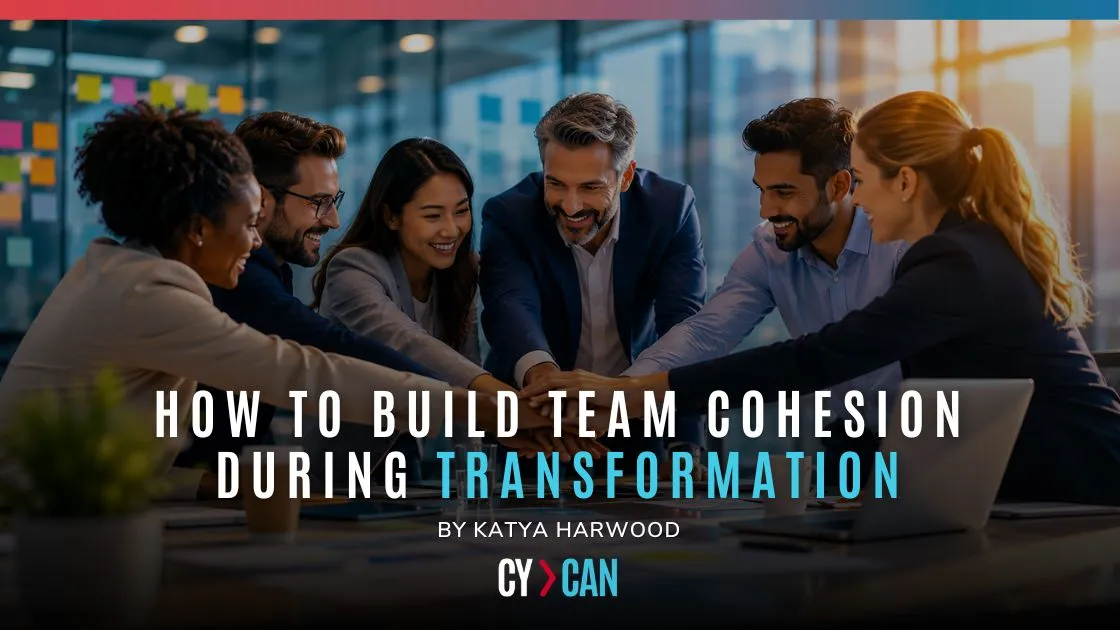
Transformation has become a permanent feature of modern organisations.
New technologies emerge faster than teams can adapt. Markets shift unexpectedly. Strategies evolve. Structures change. Leaders are asked to do more with less certainty than ever before.
Yet while organisations spend enormous resources on transformation initiatives, many overlook the one factor that determines whether change succeeds or fails:
The quality of human connection inside the team.
Transformation is rarely defeated by strategy.
It is defeated by fragmentation.
People stop communicating. Trust begins to erode. Departments retreat into silos. Leaders become overwhelmed. Team members become uncertain. Momentum slows. What began as a promising transformation became a collection of disconnected efforts. This is why team cohesion matters.
Not as a “soft skill.”
Not as a cultural luxury.
But as a strategic capability.
Research from McKinsey shows that team-centric transformation approaches can generate efficiency gains of up to 30% when organisations intentionally strengthen collaboration and cross-functional alignment. The future belongs to organisations that can transform while remaining connected.
The question is: how do leaders create that connection?
Many leaders misunderstand team cohesion.
They associate it with team lunches, personality assessments, offsite retreats, or occasional team-building exercises. While these activities can be valuable, cohesion runs much deeper.
Team cohesion is the degree to which people feel connected to a shared purpose, trust one another, communicate openly, and work collaboratively toward common outcomes.
It is not simply about liking each other. It is about moving together.
A cohesive team demonstrates:
When transformation occurs, these qualities become even more important.
Without them, change creates division.
With them, change becomes a catalyst for growth.
At Cycan, we often describe this as the difference between a group of talented individuals and a truly integrated leadership system.
One may survive change. The other can thrive through it.
For organisations seeking to strengthen alignment and leadership capacity during periods of change, our work around leadership transformation and team development provides a practical foundation for sustainable growth.
Transformation creates pressure.
Pressure reveals culture.
During uncertainty, people naturally seek safety.
Some become defensive.
Others become territorial.
Some withdraw.
Others become resistant.
Research published in Frontiers in Psychology found that during organisational change, leader strain and emotional exhaustion can significantly reduce psychological safety within teams, ultimately harming team effectiveness.
This finding is important.
Most organisations focus on managing employee resistance.
Far fewer consider the impact transformation has on leaders themselves.
When leaders become overwhelmed, connection weakens.
When connection weakens, cohesion suffers.
The result is often:
Transformation becomes harder not because the strategy is wrong, but because the human system becomes fragmented. This is why building cohesion must be intentional. It will not happen automatically.
Over the past decade, several themes consistently emerge from organisational psychology, leadership research, and transformation studies. The strongest teams tend to excel in five key areas.
If there is one concept leaders should understand during transformation, it is psychological safety.
Professor Amy Edmondson defines psychological safety as a shared belief that team members can speak up, take risks, ask questions, and admit mistakes without fear of embarrassment or punishment.
Research consistently links psychological safety with higher performance, innovation, learning, and team effectiveness.
The Chartered Institute of Personnel and Development (CIPD) highlights psychological safety as particularly critical during organisational change because it strengthens trust and confidence in leadership during uncertainty.
Leaders can strengthen psychological safety by:
People do not contribute fully when they fear consequences. They contribute when they feel safe.
One of the biggest mistakes organisations make during transformation is focusing immediately on execution.
People receive new structures.
New systems.
New processes.
New KPIs.
But they are never fully connected to the “why.”
Research from McKinsey shows employee involvement is a major predictor of transformation success, yet most organisations engage only a small fraction of their workforce in transformation efforts.
Humans do not commit to change because they understand instructions.
They commit because they understand the meaning.
Leaders should continually answer:
Purpose creates alignment. Alignment creates cohesion.
Without shared meaning, transformation feels imposed. With shared meaning, transformation feels owned.
Trust is not built through announcements. It is built through consistency. During transformation, information gaps create assumptions.
Assumptions create anxiety.
Anxiety creates disengagement.
Research from CIPD highlights trust as a key factor influencing successful organisational transformation and team performance. Leaders often communicate less when uncertainty increases because they fear creating confusion.
The opposite is required.
Communicate more.
Communicate clearly.
Communicate honestly.
Even when answers are incomplete.
Teams can handle uncertainty.
What they struggle with is silence.
Practical actions include:
Trust grows when communication remains consistent.
Transformation often changes structures.
Teams merge.
Roles evolve.
Reporting lines shift.
One unintended consequence is the loss of team identity.
People begin asking:
“Who are we now?”
Research on high-performing teams repeatedly demonstrates the importance of shared identity and collective purpose in maintaining performance through change.
Leaders can strengthen identity by revisiting:
Identity provides stability when everything else feels uncertain.
At Cycan, we often see teams regain momentum when leaders intentionally reconnect people to a shared narrative.
People need more than objectives. They need belonging.
One of the most underutilised tools for building cohesion is team coaching.
Research published in the Journal of Work-Applied Management found that team coaching significantly improved perceptions of team cohesion and psychological safety. Unlike traditional training, team coaching focuses on how people work together.
It addresses:
Transformation often exposes underlying dysfunctions.
Team coaching helps address them before they become barriers to progress. This is one reason many organisations are moving beyond individual leadership development toward whole-team transformation. The strongest organisations develop systems of leadership, not isolated leaders.
Research provides direction.
Implementation creates results.
Here are seven practical actions leaders can begin today.
Ask every team member:
These conversations surface hidden tensions before they become major issues.
Research shows clear team norms strongly influence performance and job satisfaction.
Create agreements around:
Clarity reduces friction.
Transformation often feels overwhelming because leaders focus only on end goals.
Recognise progress frequently.
Momentum builds confidence.
Confidence strengthens cohesion.
Many transformation failures stem from siloed thinking.
Create opportunities for teams to solve problems together.
Shared challenges create shared ownership.
Gallup research consistently demonstrates that managers have a profound influence on team engagement. Some analyses estimate managers account for up to 70% of team engagement variance. If leaders are struggling, teams will struggle. Invest in leadership capability before expecting team cohesion to improve.
Most organisations measure performance.
Few measure connection.
Track indicators such as:
What gets measured improves.
Transformation requires learning.
Learning requires reflection.
Build regular opportunities for teams to discuss:
Reflection strengthens adaptability and cohesion simultaneously.
Perhaps the greatest lesson emerging from modern transformation research is this:
Transformation is not primarily a structural challenge. It is a relational challenge.
The organisations that navigate change most effectively are not necessarily those with the best technology, largest budgets, or most sophisticated strategies. They are the organisations whose people remain connected while everything else changes.
Connection creates trust.
Trust creates safety.
Safety creates collaboration.
Collaboration creates adaptability.
Adaptability creates transformation.
This is the real work of leadership. Not controlling change. Helping people move through it together.
The pace of change will not slow down.
Artificial intelligence will continue reshaping work.
Markets will continue evolving.
Business models will continue shifting.
Transformation will remain constant.
The competitive advantage of the future will not be found solely in technology or strategy.
It will be found in teams that can remain aligned, resilient, and connected in the face of uncertainty. Because when people trust each other, communicate openly, and share a common purpose, they become capable of far more than any transformation framework alone can achieve.
The future belongs to organisations that understand a simple truth:
Transformation succeeds when people move together.
At Cycan, we help leaders, teams, and organisations strengthen alignment, build trust, and create the leadership capacity required for sustainable transformation. Through leadership development, team coaching, organisational alignment, and conscious leadership practices, we help organisations move beyond change management and into meaningful transformation.
If your organisation is navigating growth, restructuring, culture change, digital transformation, or leadership transition, now is the time to invest in the human systems that determine long-term success.
Don’t wait until fragmentation becomes resistance. Build cohesion before change demands it.
Explore how Cycan can help your team transform together. Because the strongest teams are not the ones that avoid change. They are the ones that learn how to move through it as one.
How can every executive be meeting their objectives while the...
Read MoreWhat does it cost your organisation when the person who...
Read MoreIf an AI can ask sharp questions, test your assumptions...
Read MoreWhat if the behaviours holding your organisation back are not...
Read MoreWe use cookies to enhance your browsing experience, serve personalised ads or content,
and analyse our traffic. By clicking "Accept All", you consent to our use of cookies.